Start Here
If you’re feeling overwhelmed and unsure how to help your loved one at home, you’re in the right place.
This page will walk you through exactly what to focus on first.
Your First Steps
Step 1: Choose 1-2 focus areas based on your needs
What's hardest right now? Communication, Cognition, Speech, or Swallowing?
Step 2: Download resources for that focus area
Get started right away! Feel free to print them and keep it in a binder for easy use
Step 3: Tie practice into daily routines
For example, every day after breakfast or during TV ads. Even 10–15 minutes daily adds up
Step 4: Focus on consistency, not perfection
You do not need a perfect routine. Small, steady practice adds up over time.
Step 5: Celebrate the daily wins
Keep track of the progress!


Want a simple way to follow these steps?
Not sure where to focus?
7 day guide
A simple, structured plan to help you know exactly what to do each day—without overthinking it.
✔ Daily exercises across all key areas
✔ Easy-to-follow instructions
✔ A clear starting point so you feel confident
Or Focus on One Area
Clear Guidance, In-depth Education, At Home Tools, & Caregiver Support
Need a mixture of all of them?
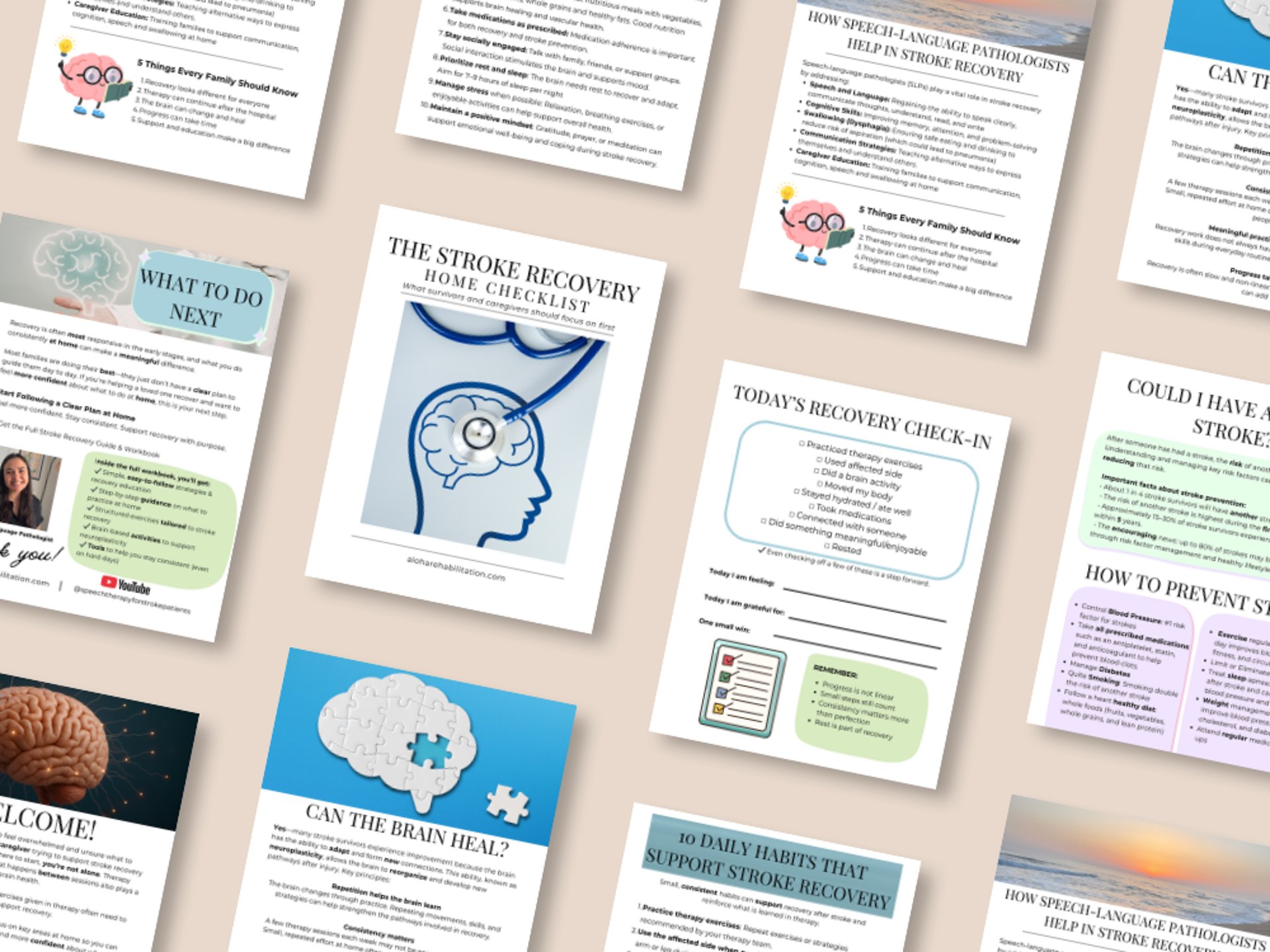
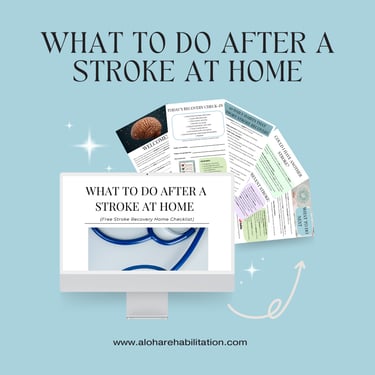
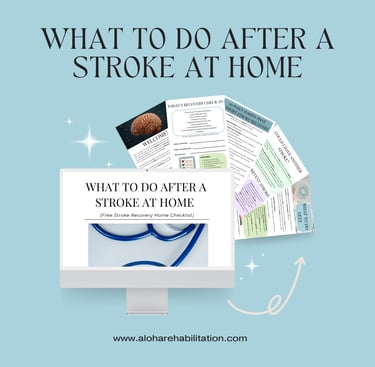
Free Guide: What to Do After a Stroke at Home
Includes:
10 Daily habits that can change your stroke recovery
Daily recovery checklist
How the brain heals
How to prevent another stroke
Where to start at home
What to do next
HOW RECOVERY WORKS
Recovery doesn’t come from doing more—it comes from doing the right things consistently.
1. Learn What Matters
Understand what actually helps recovery
2. Practice at Home
Use simple, targeted exercises
3. Stay Consistent
Small daily effort leads to meaningful progress
A structured plan makes this easier to follow


Join the Waitlist
Be the first to access the 30-Day Stroke Recovery Guide & Daily Workbook—a simple, structured plan to help you build daily progress at home.
Join the waitlist to get early access, exclusive bonuses, and the opportunity to be one of the first to try it before it officially launches.
FAQs
Who is this for?
These resources are designed for individuals recovering from stroke, brain injury, or other neurological conditions—and for the family members or caregivers supporting them.
It’s especially helpful if you:
Want structured guidance at home
Feel unsure what to work on at home
Are no longer receiving therapy but still want to make progress
What areas do you focus on?
We focus on four key areas of recovery:
Communication (understanding and expressing language)
Speech (clarity of sounds and words)
Cognition (memory, attention, problem-solving, processing)
Swallowing (safe eating and drinking strategies)
Everything is designed to be practical, clear, and usable at home.
How is this different from speech therapy?
Speech therapy is individualized, one-on-one treatment.
This program is designed to:
Give you structure between sessions
Help you stay consistent at home
Teach you how to support recovery effectively
Think of it as the bridge between therapy sessions—or support when therapy isn’t available.
Does this replace therapy?
No—this does not replace speech therapy.
This program is designed to support and enhance therapy, not substitute it.
If you have access to a Speech-Language Pathologist, continuing therapy is strongly recommended.
If you don’t currently have access, this gives you a structured, guided way to keep making progress at home—but it is not a replacement for individualized medical care.
What if we’re not currently in therapy?
That’s okay. Many people use these resources when:
Therapy has ended
Access is limited due to cost, insurance, or location
They’re on a waitlist
This program helps you continue working toward progress in a structured, supported way.
How much time should we spend each day?
Most activities are designed to be flexible and realistic.
Even 10–20 minutes a day of consistent, focused practice can make a meaningful difference over time.
Consistency matters more than long sessions.
What stage of recovery is this for?
These resources can be used across multiple stages of recovery—from early stages to long-term progress.
Activities can be adapted based on ability level, and you can move at your own pace.
Is this medical advice?
No. This content is for educational purposes only and is not a substitute for professional medical advice, diagnosis, or treatment.
Always consult with your healthcare provider or Speech-Language Pathologist for guidance specific to your situation.
Get in Touch
Questions? Reach out for support or guidance.


Contact
Here to support your recovery journey
hello@aloharehabilitation.com
© 2026. All rights reserved.